
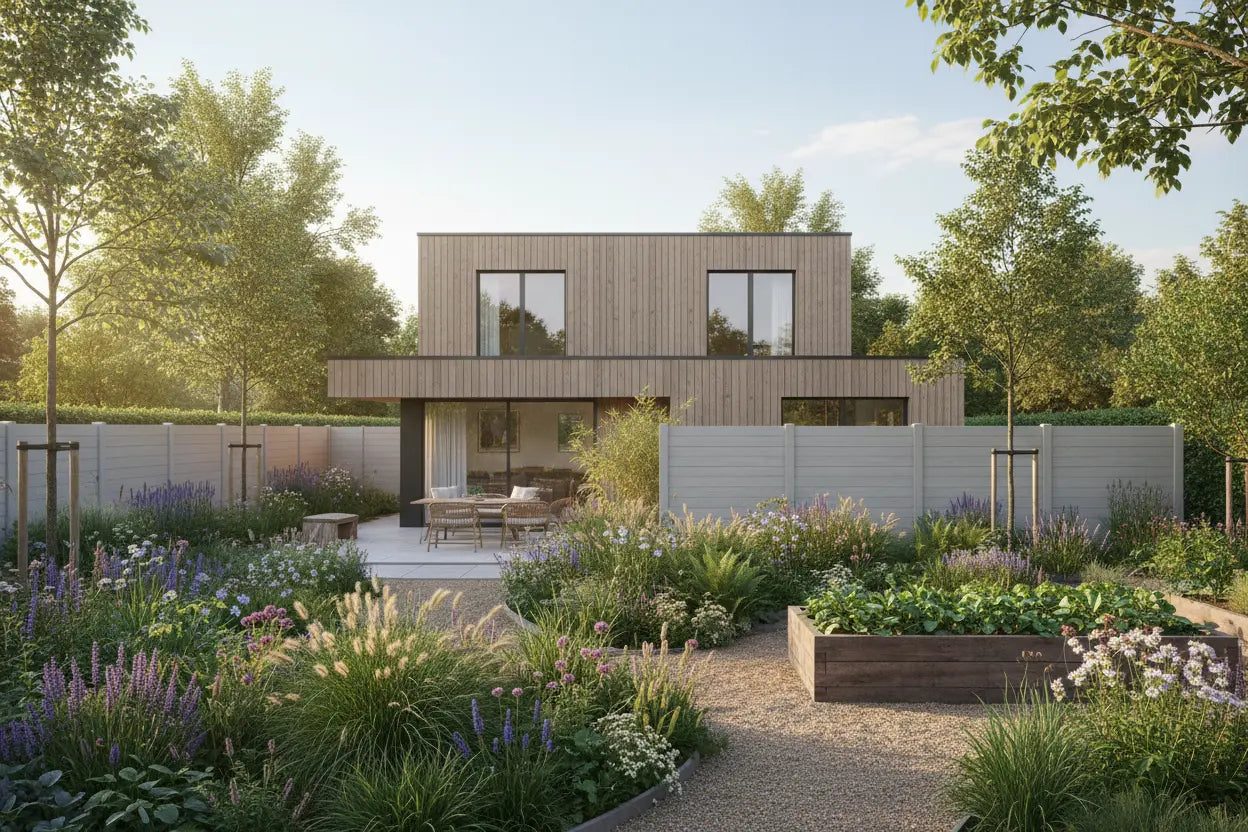
Sustainability is no longer a niche trend in construction and landscaping.
In 2026, homeowners are increasingly looking for exterior solutions that combine:
- Durability
- Low maintenance
- Modern appearance
- Environmental responsibility
This shift is changing the fencing and cladding industry rapidly.
Today’s eco-conscious homeowners want products that not only look good, but also last longer and reduce waste over time.
Why Sustainability Matters in Exterior Design
Traditional exterior materials often create major environmental issues due to:
- Frequent replacement cycles
- Chemical treatments
- High maintenance requirements
- Waste generation
A fence that lasts 5–10 years before replacement is significantly less sustainable than one designed to last several decades.
Durability itself has become a key sustainability factor.
What Makes a Fence or Cladding System Eco-Friendly?
Modern sustainable systems focus on:
- Recycled materials
- Long lifespan
- Reduced maintenance
- Recyclability
- Lower resource consumption
The goal is reducing long-term environmental impact rather than focusing only on initial production.
Composite Materials and Recycled Content
Composite fencing and cladding often use:
- Recycled plastics
- Wood fibres
- Reclaimed industrial materials
This helps reduce landfill waste while creating highly durable exterior products.
Benefits include:
- No staining
- Reduced maintenance
- Long service life
- Resistance to moisture and insects
Why Longevity is Critical for Sustainability
One of the biggest misconceptions in sustainable construction is assuming natural materials are always the most environmentally friendly.
In reality:
- Short lifespan = more waste
- Frequent replacement = higher resource use
- Ongoing maintenance = additional chemical consumption
A durable low-maintenance fence can often create a lower environmental footprint over decades than untreated timber requiring repeated replacement.
Modern Steel Systems and Sustainability
Premium galvanised steel systems are increasingly recognised for:
- Recyclability
- Long lifespan
- Minimal maintenance
- Reduced replacement frequency
High-quality coated steel can remain functional for decades while maintaining structural integrity and appearance.
Sustainable Timber Alternatives
For homeowners wanting a natural aesthetic, popular options now include:
- Thermally modified wood
- FSC-certified timber
- Timber-look composite systems
These materials aim to balance:
- Environmental responsibility
- Architectural appearance
- Long-term durability
Pros & Cons of Eco-Friendly Fencing and Cladding
| Pros | Cons |
|---|---|
| Reduced long-term waste | Higher initial cost |
| Longer lifespan | Premium materials cost more |
| Lower maintenance needs | Some composites vary in quality |
| Modern appearance | |
| Better long-term value |
Sustainable Design Trends for 2026
Current trends strongly favour:
- Dark architectural finishes
- Natural wood-effect textures
- Recycled composite materials
- Minimalist landscaping
- Durable modular systems
Homeowners increasingly want outdoor spaces that feel:
- Natural
- Modern
- Durable
- Future-proof
The Shift Toward “Buy Once” Construction
The industry is moving away from disposable exterior products.
Instead, homeowners are prioritising:
- Quality over short-term savings
- Long-term durability
- Reduced maintenance
- Lower lifetime environmental impact
This “buy once” mentality is becoming one of the strongest trends in modern exterior design.
Final Thoughts
Sustainable fencing and cladding is not simply about using recycled materials.
True sustainability comes from combining:
- Long lifespan
- Minimal maintenance
- Structural durability
- Reduced replacement cycles
In 2026, the most sustainable exterior products are increasingly the ones designed to perform reliably for decades while maintaining their appearance and functionality.
Share:
Storm-Proof Your Property: How to Choose Fencing That Won’t Blow Down
Curb Appeal 2.0: Using Exterior Cladding to Modernise Your Home’s Facade