
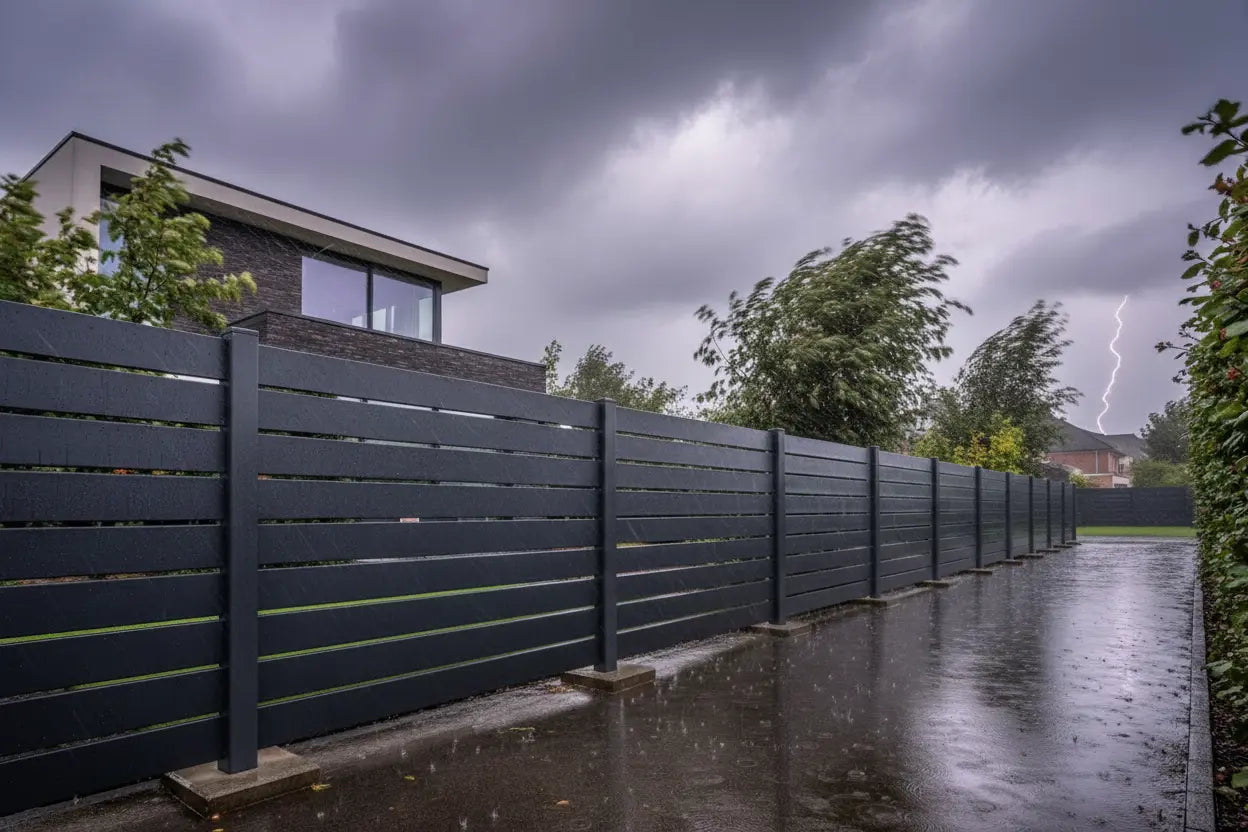
Every winter, homeowners across Belgium experience the same problem:
- Leaning fence posts
- Broken panels
- Storm damage
- Waterlogged timber structures
As weather conditions become harsher and winter storms more frequent, wind resistance is becoming one of the most important factors when choosing a new fence.
In 2026, homeowners are no longer asking only:
“Does it look good?”
They are asking:
“Will it still be standing in 10 years?”
Why So Many Fences Fail During Storms
Most fence failures are not caused by the panels themselves.
The weak points are usually:
- Poor post foundations
- Incorrect spacing
- Water-damaged timber
- Lightweight fixings
- Excessive wind pressure
Traditional solid timber fences often act like sails during strong winds, placing enormous pressure on posts and foundations.
Once moisture weakens the structure, failure becomes inevitable.
Understanding Wind Load
Wind load refers to the amount of force wind applies to a structure.
The larger and more solid the surface area, the more pressure the fence absorbs.
This is why:
- Cheap timber panels break
- Concrete posts shift
- Lightweight systems wobble
Modern fencing systems now increasingly focus on reducing wind resistance while maintaining privacy.
Why Slatted Fencing Performs Better
Horizontal slat and louvered fencing systems allow controlled airflow through the structure.
This significantly reduces:
- Wind pressure
- Structural stress
- Movement during storms
Benefits include:
- Improved stability
- Longer lifespan
- Reduced repair costs
This is one of the main reasons slatted architectural fencing has become so popular across Europe.
Steel vs Timber Posts
One of the biggest structural upgrades in modern fencing is the move away from traditional timber posts.
Timber Posts Problems
- Rot underground
- Water absorption
- Movement in wet soil
- Cracking over time
Galvanised Steel Post Advantages
- Higher structural strength
- Better long-term stability
- Resistant to corrosion
- Minimal movement
- Longer lifespan
Premium galvanised steel systems can last decades without structural deterioration when installed correctly.
The Importance of Proper Foundations
Even the best fence can fail with poor installation.
Key factors include:
- Correct post depth
- Proper concrete footing size
- Soil conditions
- Drainage management
- Fence height-to-span ratios
In wet climates like Belgium, proper drainage around posts is critical.
Best Fence Types for Windy Areas
1. Horizontal Slat Steel Fencing
Excellent airflow and structural strength.
2. Louvered Fencing
Reduces wind pressure while maintaining privacy.
3. Aluminium Slat Systems
Lightweight with good weather resistance.
4. Composite with Reinforced Steel Structure
Combines appearance with structural support.
Pros & Cons of Wind-Resistant Fencing
| Pros | Cons |
|---|---|
| Better storm durability | Higher upfront investment |
| Reduced repair costs | Requires precise installation |
| Longer lifespan | Premium systems cost more |
| Improved structural stability | |
| Better performance in wet climates |
Common Mistakes Homeowners Make
Choosing Price Over Structure
Cheap panels often fail first during storms.
Ignoring Post Quality
Posts are more important than panels.
Installing Oversized Solid Panels
Large uninterrupted surfaces increase wind pressure dramatically.
Poor Drainage Around Posts
Standing water weakens foundations over time.
Which Material Performs Best?
For high-wind areas, galvanised steel currently offers one of the strongest balances between:
- Structural integrity
- Corrosion resistance
- Low maintenance
- Modern appearance
Especially when combined with:
- Reinforced posts
- Slatted designs
- Professional installation
Final Thoughts
A fence is not just a decorative feature.
It is a structural exterior element exposed to:
- Rain
- Wind
- Frost
- Soil movement
- UV exposure
Choosing a wind-resistant system in 2026 means thinking beyond aesthetics and focusing on long-term performance, durability, and installation quality.
The cheapest fence is often the one that needs replacing first.
Share:
Privacy Without the Darkness: Why Louvered and Slat Fencing are 2026’s Biggest Trends
Sustainable Boundaries: A Homeowner’s Guide to Eco-Friendly Fencing and Cladding