
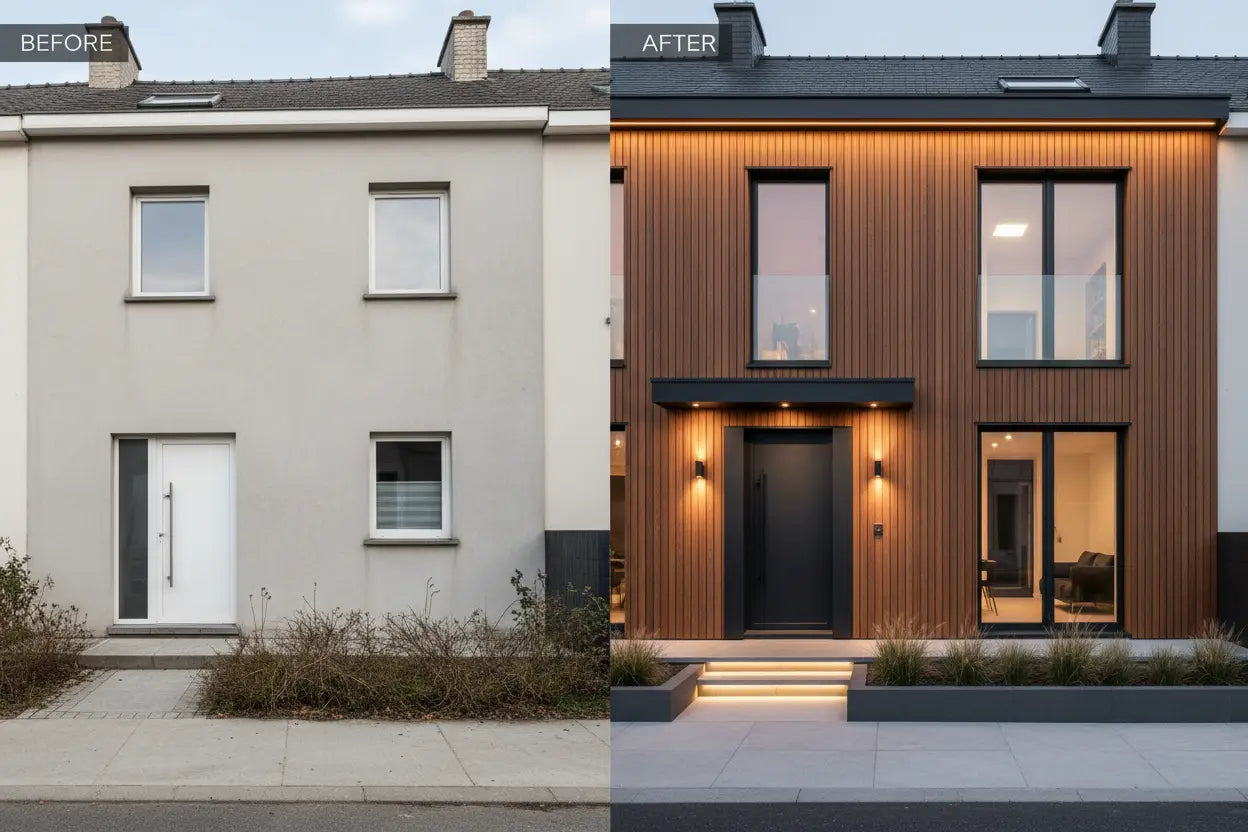
First impressions matter.

In 2026, homeowners are investing more into exterior appearance than ever before — not only for aesthetics, but also for property value and energy performance.

One of the fastest-growing trends in exterior renovation is architectural cladding.

Modern cladding systems can completely transform outdated facades into sleek contemporary homes without requiring full reconstruction.


Why Exterior Cladding is Growing Rapidly

Traditional rendered facades often suffer from:

  • Cracking
  • Discoloration
  • Algae growth
  • High maintenance costs

Modern cladding offers a cleaner, more durable alternative while dramatically improving curb appeal.

Homeowners increasingly want:

  • Modern architecture
  • Low maintenance
  • Energy efficiency
  • Long-term durability

Cladding addresses all four.


What is Modern Exterior Cladding?

Exterior cladding is a protective decorative layer installed over an existing wall structure.

Modern systems are available in:

  • Metal
  • Composite
  • Fibre cement
  • Timber-effect finishes

Many homeowners now use cladding selectively rather than covering the entire home.

Popular applications include:

  • Entrance features
  • Garage facades
  • Upper floor accents
  • Garden rooms
  • Extensions

Why Timber-Look Cladding is Trending

Natural wood aesthetics remain highly desirable.

However, real timber often creates long-term maintenance problems including:

  • Fading
  • Rot
  • Repainting requirements
  • Moisture expansion

Modern timber-look cladding replicates the appearance of wood while offering:

  • Better durability
  • UV resistance
  • Minimal maintenance

This balance is driving enormous growth in architectural metal and composite systems.


Metal Cladding vs Traditional Render

Render Problems

  • Cracks over time
  • Dirt retention
  • Moisture staining
  • Regular repainting

Modern Metal Cladding Advantages

  • Contemporary appearance
  • Weather resistance
  • Faster cleaning
  • Long lifespan
  • Minimal maintenance

Premium coated steel cladding systems can maintain their appearance for decades.


Pros & Cons of Exterior Cladding

Pros Cons
Modernises older homes Higher upfront investment
Low maintenance Installation quality is critical
Improves curb appeal Poor systems may look artificial
Can increase property value
Weather resistant

Popular Cladding Colours in 2026

The strongest trends currently include:

  • Anthracite RAL7016
  • Dark grey RAL7024
  • Black architectural finishes
  • Walnut timber effects
  • Oak timber textures

Matte finishes continue outperforming glossy surfaces in modern architecture.


Does Cladding Increase Property Value?

In many cases, yes.

A modernised facade can improve:

  • Buyer perception
  • Architectural appeal
  • Perceived build quality
  • Market competitiveness

Especially when paired with:

  • Modern windows
  • Contemporary fencing
  • Exterior lighting
  • Minimalist landscaping

Low-Maintenance Architecture is the Future

Modern homeowners increasingly prioritise:

  • Durability
  • Simplicity
  • Long-term savings

Exterior cladding aligns perfectly with this trend.

Instead of repainting facades every few years, homeowners now prefer systems that remain visually attractive with minimal upkeep.


Final Thoughts

Exterior cladding is no longer reserved for luxury architectural homes.

It has become one of the most effective ways to:

  • Modernise a property
  • Improve curb appeal
  • Reduce maintenance
  • Create a more premium appearance

In 2026, modern exterior design is increasingly defined by clean lines, durable materials, and architectural simplicity — and cladding sits at the center of that transformation.

Welcome to Mavlli — Transform Your Garden into a Private Sanctuary

How to chose the correct fence for your property.

Hello and welcome! I’m thrilled you’ve stopped by. Whether you’re a green-thumbed DIYer, a homeowner wanting peace and quiet, or someone looking to boost your garden’s charm — you’ve come to the right place. At Mavlli, we believe your outdoor space should feel like a retreat: beautiful, secure, and private.

In this first post, I’ll walk you through why a quality fence or screening solution can be a game-changer for your garden — and how to think about choosing the right one for your space.

Why Invest in Garden Privacy (It’s More Than Just Keeping Neighbors Out)

You might think, “Do I really need a fence?” The answer is: in many cases, yes — and here’s why:

1. Create a Personal Sanctuary

A well-designed fence helps your garden feel like your own private space. You can unwind, read, entertain, or just be yourself without feeling watched.

2. Noise Reduction & Wind Protection

A solid fence acts as a buffer. In busy neighborhoods, it can muffle street noise. In windy areas, it helps shelter your garden, protect plants, and make the space more usable.

3. Safety for Kids, Pets, & Plants

A secure barrier ensures children and pets stay where you intend. It also helps keep unwanted visitors (animals, intruders) out.

4. Aesthetic & Property Value Boost

The right fence adds structure and visual appeal. Landscaping, trellises, and decorative panels can turn your boundaries into beautiful backdrops. Plus, it can help improve your home’s perceived value.

5. Define Boundaries Clearly

Disputes over where your land ends and your neighbour’s starts can be avoided with a clear, durable fence line.

Choosing the Right Fence for Your Garden

Every garden is unique. Here’s a guide to key decisions you’ll want to make:

Material & Maintenance

Material / Pros-Cons / Considerations

Wood (cedar, pine, etc.) / Natural look, customisable, can be stained or painted / Requires periodic maintenance (sealing, staining).

Vinyl | Composite - Low maintenance, durable, clean lines / Higher upfront cost, fewer options for alteration.

Metal | Steel | Aluminium - Very durable, sleek, often modern / Can get hot in sun, costlier, might feel less “warm” than wood

Decorative Screens | Panels - Great for accent areas, flexible use, stylish / Less robust as full fence, may not provide full security.

Height & Visibility

  • For real privacy, fences are often 1.8 m (≈ 6 ft) or more.
  • If you’re constrained by local rules or want partial openness, consider lattice tops, trellises, or green walls to soften the boundary.
  • Always check local zoning and height restrictions.

Style & Garden Integration

  • Let your fence echo your home’s architecture or your garden style (modern, rustic, cottage, minimalist).
  • Use the fence as a backdrop: plant climbers or vines to soften lines.
  • Decorative panels or screens can define zones (seating corner, vegetable patch, etc.).

Budgeting & Phased Upgrade

  • Don’t feel you need to fence your entire garden at once. Start with the side that matters most (next to road, neighbour view).
  • Factor in hidden costs: foundations/posts, gates, concrete footing, fasteners, maintenance.

Your Next Steps (And How Mavlli Can Help)

  1. Plan Your Priorities

    List what matters most: is it full visual privacy, noise reduction, style, or low upkeep?
  2. Measure and Map

    Sketch your space. Note length of boundaries, slope, gate locations, existing obstructions.
  3. Choose Material & Style

    Based on your priorities, pick one or mix styles (e.g., wood imitation + decorative panel).
  4. Order / Source Smartly

    Make sure posts, fasteners, and panels are durable and suitable for your climate.
  5. Install & Maintain

    Either DIY or hire pros. Maintain yearly (cleaning, sealant, inspections).

At Mavlli, we offer a curated selection of fencing solutions built with quality and design in mind. Over the coming weeks, I’ll share product spotlights, “how-to” installation guides, customer stories, and design inspirations to help you turn your garden into what you’ve always dreamed of. You can also visit our installers hub page for information on how to install our fences.

Final Thought

Your garden is more than just soil and plants — it’s an extension of your home, a place of rest, and a personal sanctuary. With the right fence or screen, you reclaim control over how your outdoor space is seen and used. I’m glad you’re here as we set out together to make gardens more private, more beautiful, more you.